
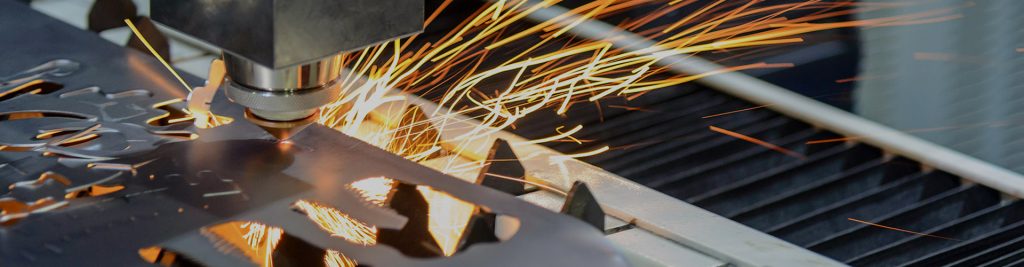
Laser cutting has been widely used in manufacturing for many years, especially for processing flat metal sheets. Traditional 2D laser cutting systems are highly efficient when dealing with standard sheet materials, but they are often limited when parts require complex three-dimensional geometries.
As modern products become more sophisticated—particularly in industries such as automotive, aerospace, and advanced equipment manufacturing—the need for more flexible processing technologies has grown. This is where 3D five-axis laser cutting comes into play.
By combining multi-axis motion control with high-precision laser processing, 3D laser cutting systems allow manufacturers to process complex parts that were previously difficult or inefficient to machine using conventional methods.
What Is 3D Five-Axis Laser Cutting?
A 3D five-axis laser cutting machine uses five independent motion axes to control the position and angle of the cutting head. In addition to the traditional X, Y, and Z linear axes, the system includes two rotational axes that allow the laser beam to approach the workpiece from different angles.
This multi-axis capability allows the laser to follow complex contours, curved surfaces, and angled edges while maintaining precise cutting quality.
Unlike standard flatbed laser cutting machines, which are mainly used for sheet materials, five-axis systems can process three-dimensional components, formed metal parts, tubes, and complex structures.
The result is a highly flexible cutting process that can handle a wide variety of materials and part geometries.
Why Manufacturers Are Adopting 3D Laser Cutting
One of the main advantages of five-axis laser cutting is its ability to process complex shapes in a single setup. Traditional machining methods often require multiple fixtures, repositioning steps, or additional finishing operations.
With a multi-axis laser system, many of these steps can be eliminated.
This leads to several practical benefits for manufacturers:
- Higher processing precision for complex components
- Reduced need for secondary machining operations
- Lower material waste compared with conventional trimming methods
- Improved production efficiency for formed parts
- Greater flexibility when handling customized designs
Because the laser beam can be positioned at different angles, manufacturers can cut, trim, and perforate parts with complex geometries without compromising accuracy.
Applications in Automotive Manufacturing
The automotive industry is one of the largest adopters of 3D five-axis laser cutting technology.
Modern vehicles increasingly rely on hot-stamped steel components to improve structural strength while reducing weight. After hot forming, these parts must be precisely trimmed and processed to meet strict dimensional tolerances.
Five-axis laser cutting systems are commonly used to process components such as:
- B-pillars
- door frames
- roof structures
- reinforcement parts
Because the cutting head can move freely around the formed part, the laser can accurately follow the contour of complex automotive components. This makes the technology well suited for trimming and hole cutting on hot-formed body parts.
In addition to improving cutting precision, laser processing also reduces tool wear and simplifies the overall manufacturing workflow.
Aerospace and High-Performance Materials
The aerospace sector places extremely high demands on manufacturing precision and material performance. Components often involve complex shapes and advanced materials such as titanium alloys, aluminum alloys, and high-strength steels.
Traditional machining methods may struggle to process these materials efficiently, especially when parts include curved surfaces or multi-directional cutting paths.
Five-axis laser cutting provides a practical solution for these challenges. The ability to adjust the cutting angle dynamically allows the laser to process intricate geometries while maintaining consistent cutting quality.
For aerospace manufacturers, this technology helps improve both part accuracy and production efficiency.
Precision Equipment and Medical Applications
Beyond large industrial sectors, 3D laser cutting is also becoming increasingly relevant in the production of precision components.
Medical devices, scientific instruments, and high-precision mechanical equipment often include intricate structures that require extremely accurate processing.
Laser cutting offers several advantages in these applications:
- very narrow cutting kerf
- high dimensional accuracy
- minimal mechanical stress on the material
These characteristics make the technology suitable for manufacturing small and complex components used in surgical tools, implants, sensors, and other precision devices.
The Role of Automation and Smart Manufacturing
Another reason for the growing popularity of 3D laser cutting is its compatibility with modern automated production systems.
Advanced laser cutting machines are often integrated with digital control platforms, automated loading systems, and intelligent monitoring tools. These features allow manufacturers to maintain consistent processing quality while improving overall production efficiency.
As manufacturing continues to move toward digitalization and smart factory concepts, multi-axis laser processing technologies are expected to play an increasingly important role.
Looking Ahead: The Future of 3D Laser Processing
As new materials and product designs continue to emerge, manufacturing technologies must evolve to keep up with these changing requirements.
3D five-axis laser cutting represents an important step in that evolution. By combining precision laser technology with flexible multi-axis motion control, manufacturers gain the ability to process complex components more efficiently than ever before.
While the technology is already widely used in industries such as automotive and aerospace, its applications are likely to expand further in the coming years.
For companies dealing with advanced materials, complex geometries, or high-precision components, five-axis laser cutting is becoming an increasingly valuable tool in modern manufacturing.lis.