
Glass has become an essential material in many modern industries. From architectural façades and consumer electronics to medical devices and optical systems, it offers a combination of transparency, strength, and design flexibility that few materials can match.
However, processing glass has always been challenging. Traditional cutting methods such as wheel scribing or waterjet cutting can struggle to meet the precision and edge quality required by today’s high-end products. Edge chipping, microcracks, and limited design flexibility are common issues that manufacturers must deal with.
With the growing demand for thinner and more complex glass components, many manufacturers are turning to laser glass cutting technology as a more advanced and reliable solution.
How Laser Glass Cutting Works
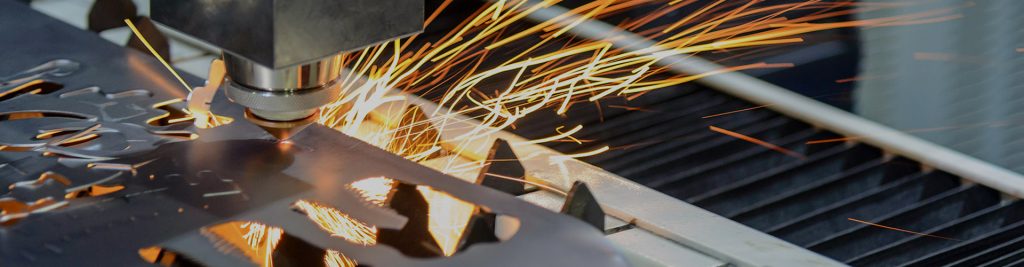
Laser glass cutting relies on a focused laser beam to create a controlled modification or scribe line along the surface or inside the glass material. Once this line is formed, the glass can be separated precisely along the predefined path.
There are two commonly used approaches in laser glass processing.
One approach is thermal stress cracking, where the laser locally heats the glass along the cutting path. A cooling mechanism—often air or a cooling gas—is then applied. The rapid temperature difference generates controlled stress inside the material, allowing the glass to split cleanly along the laser path.
Another method involves ultrashort pulse lasers, such as picosecond or femtosecond lasers. These lasers create a modification layer inside the glass without affecting the surface. The internal structure of the material is altered along a continuous line, and the glass can later be separated mechanically or thermally along this modified region.
Both methods enable highly accurate cutting with minimal damage to the surrounding material.
Advantages Over Traditional Glass Cutting Methods
One of the main advantages of laser glass cutting is precision. The laser beam can be controlled very accurately, producing extremely narrow cutting paths and clean edges. This reduces material loss and often eliminates the need for additional polishing or finishing processes.
Another important benefit is the reduction of microcracks. In traditional mechanical cutting, stress introduced by physical contact can weaken the material and affect long-term durability. Laser processing significantly reduces this risk because it is a non-contact process.
Flexibility is another key advantage. Since the cutting path is controlled digitally through CNC systems, manufacturers can easily process straight lines, curves, holes, or complex geometries without changing physical tools.
This makes laser cutting particularly suitable for products that require customized designs or frequent design updates.
Applications in Modern Industries
Laser glass cutting technology is already widely used in several advanced industries where precision and reliability are critical.
Consumer Electronics
The electronics industry is one of the largest users of laser glass processing. Smartphone and tablet manufacturers rely on precise glass cutting to produce cover glass, camera lens protectors, fingerprint sensor windows, and display components with complex shapes.
Features such as rounded corners, ultra-narrow bezels, and notches require extremely accurate cutting processes that traditional tools often struggle to achieve.
Automotive Displays
Modern vehicles increasingly incorporate digital displays and advanced optical components. Laser cutting is commonly used to process glass for in-vehicle displays, head-up display (HUD) systems, and decorative glass elements used in interior design.
Photovoltaic Industry
In solar panel manufacturing, thin glass layers are often used as protective covers or structural components. Laser cutting allows manufacturers to separate glass panels precisely while minimizing breakage and material loss.
Medical and Scientific Devices
Precision glass components are widely used in medical laboratories and scientific instruments. Applications include microscope slides, microfluidic chips, and specialized glass components used in analytical equipment.
Laser cutting technology makes it possible to produce these small and delicate structures with a high degree of consistency.
Integration with Automated Production
Another reason why laser glass cutting is gaining popularity is its compatibility with automated manufacturing systems.
Modern laser cutting equipment can be integrated with vision alignment systems, automated loading platforms, and real-time monitoring tools. These features allow manufacturers to maintain stable processing conditions while achieving high production throughput.
For industries such as electronics manufacturing, where large volumes and consistent quality are required, this level of automation is especially valuable.
The Future of Laser Glass Processing
Laser technology continues to evolve rapidly. Advances in ultrafast lasers, particularly femtosecond laser systems, are opening new possibilities for processing ultra-thin and fragile glass materials.
At the same time, improvements in control systems, process monitoring, and digital manufacturing platforms are helping manufacturers achieve greater stability and efficiency.
As glass continues to play a larger role in advanced products—from flexible electronics to high-precision optical devices—laser glass cutting is expected to become an increasingly important manufacturing technology.
Rather than being just another cutting method, it is gradually becoming a key tool for enabling innovative glass designs and high-precision production.